![Project Management Essentials [Hybrid Learning]](https://training.procept.com/img/course_type/project_management_bg.png)
This course is a combination of self-directed e-learning modules and live, instructor-led online group sessions. It is an accessible, hands-on journey through a project from initiation to closing, with a special emphasis on initiation and planning. Course participants practice using project management tools and techniques while they experience the realistic challenges that are encountered on projects.
Project Management Essentials is aligned with the Project Management Institute’s (PMI’s) Guide to the Project Management Body of Knowledge and it introduces tools and terminology without overwhelming participants with jargon. The course focuses on developing practical skills that can be applied immediately to increase the level of success on projects.
This fun on-line course consists of a series of videos and short offline activities for participants to complete at their own pace, followed by live online group classes where an instructor guides participants through the content, answers questions, and conducts group discussions and case study activities to help ensure that the content is fully understood. The course uses two cases studies so participants can practice the tools they have learned on projects facing challinges similar to the ones they will face in their real-life work environment. The course includes sample answers for the exercises; pointing out best practices and also areas for improvement.
This course is composed of six self-directed e-learning modules, each followed by a 2-hour instructor-led online class.
Additional versions are available for classroom delivery:
Participants will gain practical skills to:
The Project Management Essentials Online course is appropriate for individuals who are:
There is no prerequisite for this course. It functions as a stand-alone course.
Participants will receive access to the online course including many video files, an electronic copy of a course workbook that they can print containing exercises and case study materials. and an online quiz to test that course concepts were properly understood.
Introduction and PM Context
Initiating the Project
Planning the Project
| Project Execution
Project Closure
Wrap-up
|
Course ID: 1550A
Course Level: Beginner
Duration: 20 hours


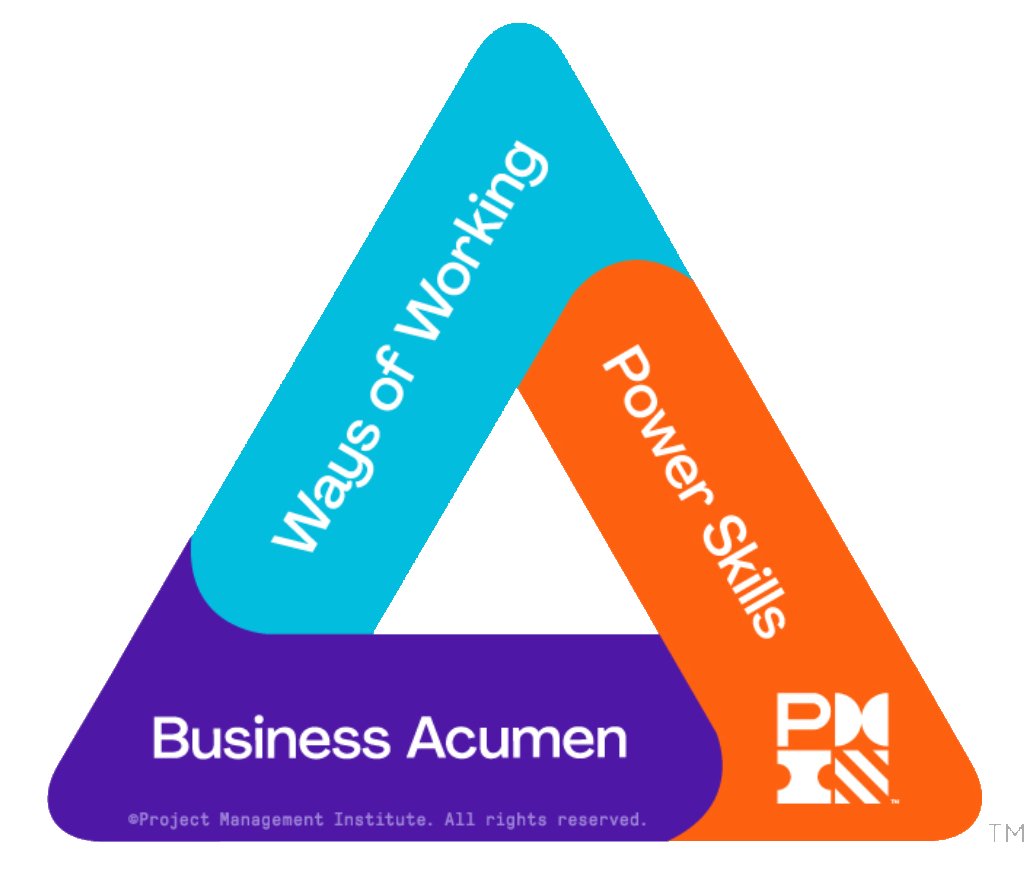 The following table provides the breakdown of the professional development units (PDUs) for the self-directed online version of this course aligned with the PMI Talent TriangleTM.
| WoW | PS | BA | |
| PMP | 17 | 1 | 2 |
| PgMP | 17 | 1 | 2 |
| PfMP | 3 | 1 | 2 |
| PMI-ACP | 17 | 1 | 2 |
| PMI-SP | 7 | 1 | 2 |
| PMI-RMP | 3 | 1 | 2 |
| PMI-PBA | 17 | 1 | 2 |
The three columns in the above table are Ways of Working, Power Skills & Business Acumen.
Other professional (re)certification credits are available, including: